
Every year, around International Women’s Day, we celebrate the achievements of women across the world. What is less commonly remembered is that the holiday itself was born out of a moment of profound social change.
In March of 1917 (February on the Russian calendar at the time), thousands of women textile workers in Petrograd took to the streets demanding “bread and peace.” Their protest was not planned as a revolution. It was a response to food shortages, the devastating toll of World War I, and the unbearable pressure of daily life. Yet their courage sparked a wave of demonstrations and strikes that spread across the city. Within days, soldiers began refusing orders to suppress the crowds. Within weeks, the Tsar abdicated. Historians widely recognize the women’s strike of March 8, 1917 as the event that ignited the Russian Revolution and helped bring Russia’s participation in World War I to an end. This story reminds us of something both inspiring and sobering: ordinary people can change the course of history.
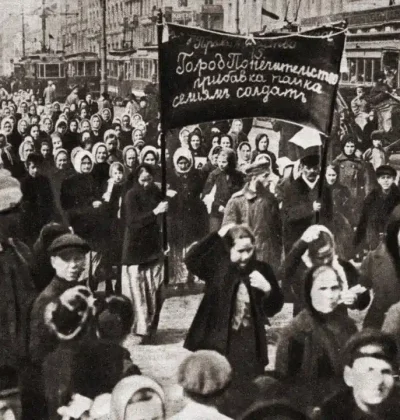
But history also shows us that the aftermath of upheaval is complicated. Regimes fall, but new regimes rise. Movements fueled by righteous anger can lead to liberation or simply shift power from one side to another.
For those of us working in leadership, community engagement, and facilitation, this raises an important question:
How do we balance advocacy with facilitation?
Advocacy mobilizes energy. It calls attention to injustice and demands change.
Facilitation creates the space where people can listen, understand, and build solutions that last.
Without advocacy, systems rarely move.
Without facilitation, systems often fracture.
Sustainable change requires both.
At HueLife, we believe that one of the most powerful ways to practice this balance is through service, using facilitation not only as a professional skill, but as a contribution to community resilience.
This spring, we are continuing our Milwaukee nonprofit support initiative, where facilitators volunteer their time to help local organizations navigate complex challenges, strengthen strategy, and build collaborative leadership. These nonprofits are doing vital work in their communities, often with limited resources. Skilled facilitation can help them move faster, align their teams, and make better decisions.
Participants will:
History reminds us that change rarely comes from a single leader or a single moment. It emerges when people step forward sometimes to protest, sometimes to listen, sometimes to hold space for others to find their voice.
Perhaps the most powerful strategy for change is not simply to challenge systems, but to help communities build the capacity to shape their own future.
And sometimes that work begins with something simple:
A circle of people.
A good question.
And someone willing to facilitate the conversation.